
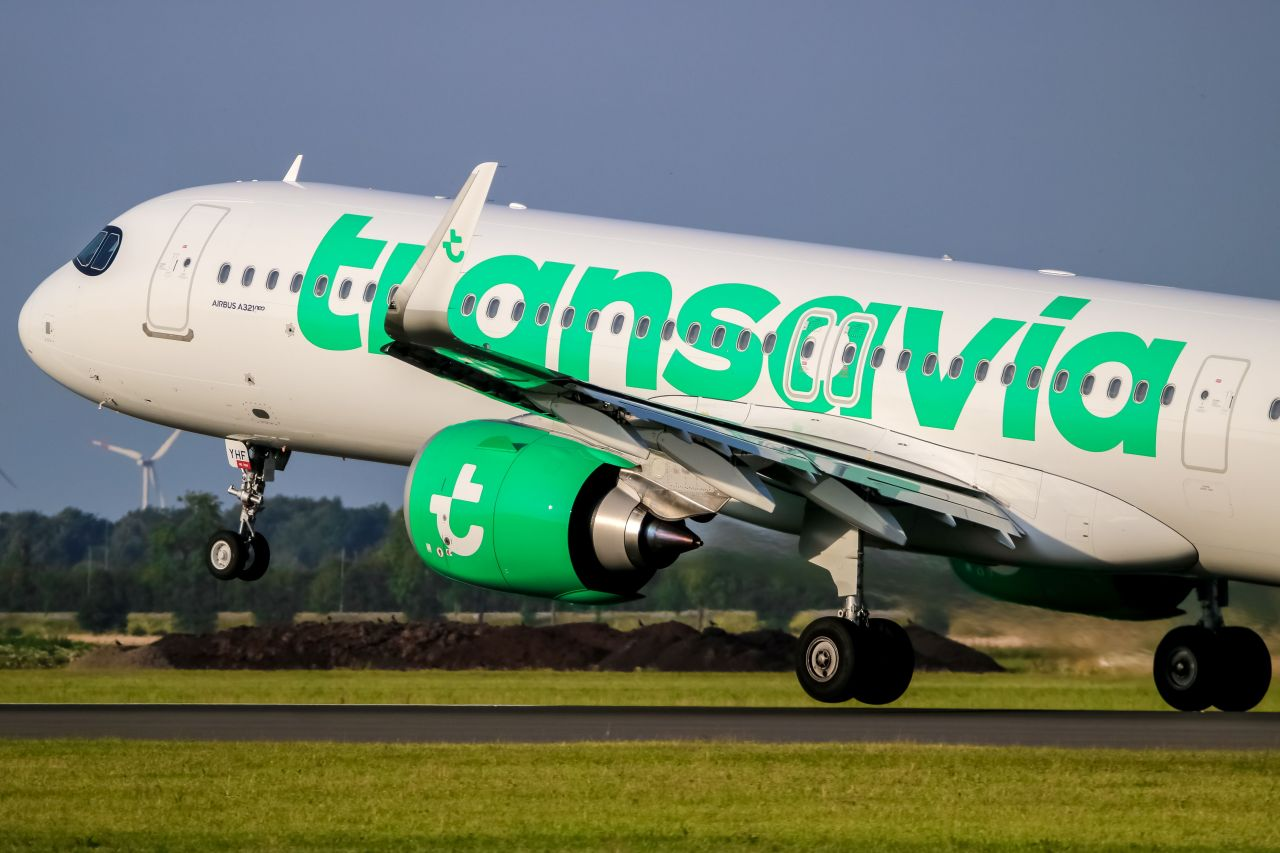
Transavia is equipping its entire Airbus fleet with Iris, the operational satellite-based datalink communication service that enables more efficient and resilient communication between aircraft and air traffic control.
Transavia is the latest major European airline to deploy Iris across its fleet, joining easyJet, ITA Airways and Jet2, which are already flying with this datalink communication service. Six Transavia’s Airbus A321neos are already flying with Iris, with the full Airbus fleet expected to be equipped by the end of October 2026.
As the EASA-certified Iris Service Provider, ESSP supports the operational delivery of Iris service across Europe. Iris is already an established component of Europe’s digital Air Traffic Management (ATM) infrastructure, providing satellite-based datalink communication for aircrafts and air navigation service providers.
Turning digital connectivity into operational benefits
For airlines, Iris can deliver tangible operational benefits by enabling more efficient exchanges of information between the cockpit and air traffic control. This can support more direct trajectories and optimal flight levels, helping airlines operate more efficiently while contributing to reductions in fuel consumption and CO₂ emissions.
As Ms. Marloes van Laake, Chief Operating Officer at Transavia, highlighted:
“Technology such as Iris helps us reduce fuel consumption and CO₂ emissions, while simultaneously contributing to more efficient use of European airspace.”
Source: Transavia equips Airbus fleet
From operational service to European scale
More than 55,800 Iris-connected flights have already been managed across Europe, while initiatives such as ESMA DSD and AMEA DSD are supporting the demonstration and implementation of multilink communications, bringing airlines and aviation stakeholders together to strengthen the resilience and efficiency of European airspace connectivity.
Around 700 Airbus aircraft are expected to be equipped and flying with Iris capabilities by 2030, further extending the reach of the operational service.
Transavia’s fleet deployment adds further scale to an operational network already established across European airspace. Four Air Navigation Service Providers — Eurocontrol MUAC (Maastricht Upper Area Control Centre), DSNA (Direction des Services de la navigation aérienne), DFS Deutsche Flugsicherung GmbH and Skyguide — are already providing Iris services within their areas of responsibility. Together, they cover approximately 40% of European en-route traffic.
Operational connectivity across European airspace
Iris provides a satellite-based communication layer for European air traffic management, supporting CPDLC and ADS-C services during the en-route phase. Following the latest infrastructure upgrades, Iris-equipped aircraft can operate across the entire ECAC area without restrictions, with communications automatically routed through Iris or VDLm2 according to air-ground link availability.
Conclusion
With Iris already embedded in commercial aviation operations across Europe, more than 55,800 Iris-connected flights managed to date and Iris-equipped aircraft able to operate across the entire ECAC area, Iris is delivering an operational satellite-based communication capability for European Air Traffic Management today. Transavia’s fleet-wide deployment adds further scale to this established European infrastructure.
About Iris
Iris is a satellite-based datalink communication service designed to support the modernization of air traffic management in Europe. Developed in partnership with the European Space Agency (ESA), it enables secure and reliable communication between aircraft and ground systems through satellite connectivity.
The satellite network used for Iris connectivity is operated by Viasat, while European Satellite Services Provider (ESSP) acts as the certified Iris service provider, delivering the service to Air Navigation Service Providers across Europe.
By complementing terrestrial datalink infrastructure, Iris supports advanced digital communications between pilots and air traffic controllers and enables the deployment of future ATM concepts such as trajectory-based operations.